
Best Practice: The Complete Playbook Feedback Loop
The biggest trap in active trading is keeping your strategy in your head. When volatility rises and a position moves against you, vague rules become easy to negotiate.
A Playbook turns that vague plan into something you can review. In Trandence, Playbooks help you define the setups you want to trade, connect trades back to those setups, and compare your execution with your intent.
1. Structure The Setup Before You Trade
A useful Playbook is not a motivational note. It should describe the conditions that make a trade valid and the behavior that would make it invalid.
When creating a Playbook in Trandence, organize rules into clear categories:
- SETUP: Market conditions, catalyst, volume, context, or pattern requirements.
- ENTRY: What needs to happen before you enter.
- RISK: Sizing, stop placement, daily risk, or invalidation rules.
- EXIT: Scaling, trailing, target, or stop-management rules.
- OTHER: Any extra rule that does not fit the main categories.
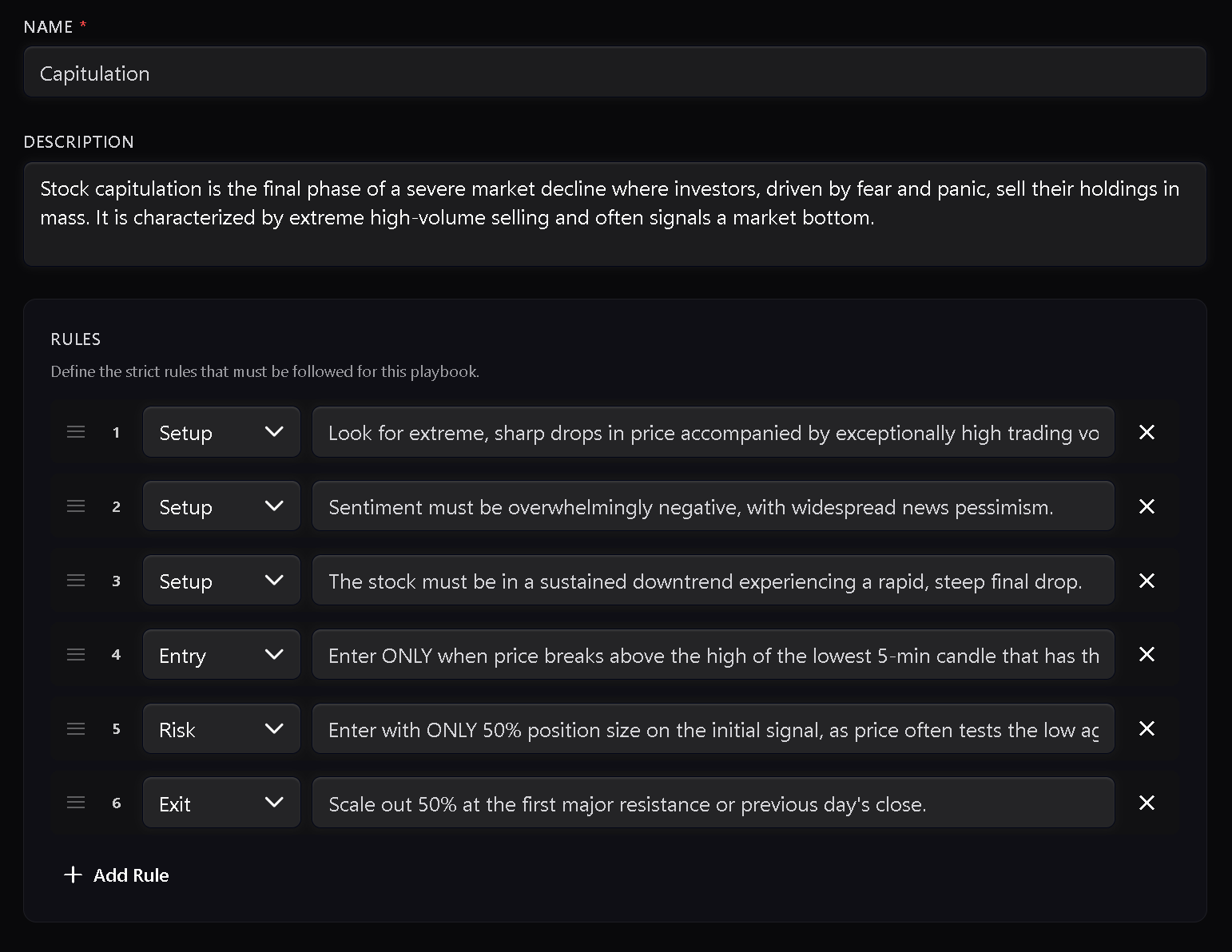
You can also set a default setup quality for a Playbook. That gives the review workflow a starting point when the Playbook is selected later.
2. Connect Your Review Back To The Plan
After the session, use the Symbol Report to review each traded symbol. This is where the Playbook becomes useful.
During the review, you can record whether the symbol was planned, assign a Playbook, set setup quality, review planned risk, add mistake tags, and write a reflection. You can also assign Playbooks to trade groups when the session contains more than one idea.
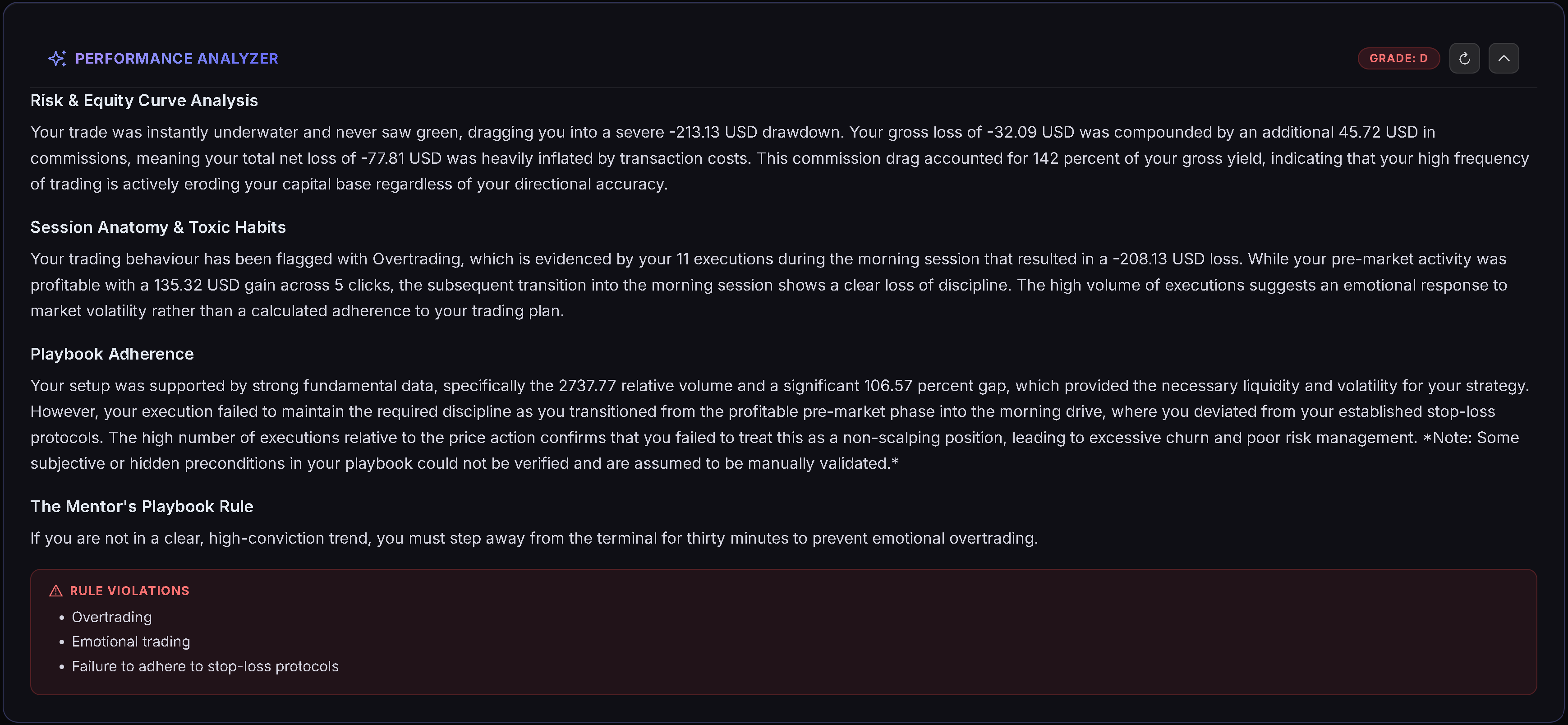
The point is simple: separate a trade that followed your plan from a trade that only happened to make money.
3. Review Patterns Across Time
One review tells you what happened today. Repeated reviews show whether your process is improving.
Use Dashboard Analytics, Calendar period insights, and Symbol Reviews to look for patterns:
- Which Playbooks are producing cleaner execution?
- Which setups are creating repeated mistakes?
- Are unplanned trades hurting the period?
- Are fees or giveback masking a good setup?
- Does readiness affect execution quality?
This is the feedback loop: build the Playbook, trade the setup, review the execution, and adjust the next plan.
4. Keep AI Coach In The Right Role
AI Coach and Deep Dive can help summarize context and point your attention toward useful next steps. They work best after your journal is complete and your review fields are filled in.
Use AI Coach as a review assistant, not as a replacement for your rules. Your edge improves when your planning, execution, and review all point in the same direction.
Ready to Master Your Trading Psychology?
Join Trandence and let data-driven analytics detect tilt, enforce your playbook, and grade your execution — so you can trade with discipline.
Start Your Free Trial