
Why Your Daily P&L Is Lying To You: Building A Better Routine
If you ask the average trader how the session went, the answer is usually a number: “I was up $400” or “I was down $150.”
That number matters, but it does not tell the whole truth. A green day can hide impulsive entries, poor risk control, fee drag, or one lucky trade that covered a broken process. A red day can still be a good review if you followed the plan and managed risk well.
The better question is not only “Did I make money?” It is “Did I trade the way I said I would?“
1. Start With Readiness
Before the open, use the Daily Plan to score mental, physical, and market readiness from 1 to 5.
- Mental: focus, patience, emotional control
- Physical: sleep, energy, physical condition
- Market: whether the current environment fits your setups

Readiness helps you adjust expectations before you trade. If the day starts with weak readiness, the plan should be smaller, simpler, or paused.
2. Plan The Trades You Want To Take
Playbooks help you define the setups you actually want to trade. A strong Playbook describes setup conditions, entry criteria, risk rules, and exit behavior.
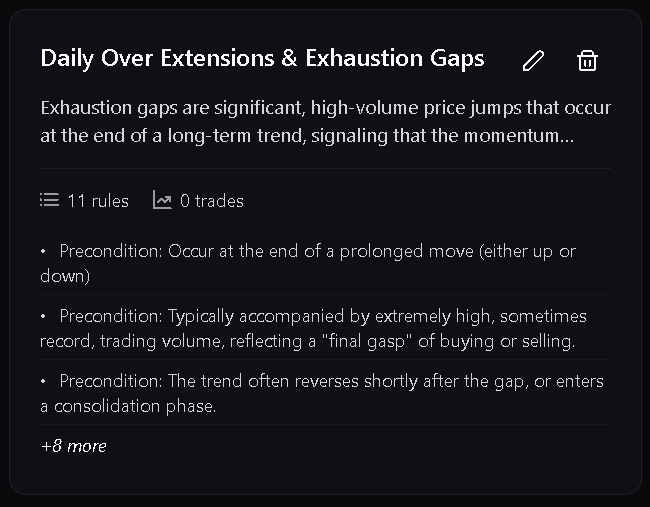
In your Daily Plan, prepare the symbols you expect to trade, assign Playbooks where appropriate, and define risk before the market forces a decision.
3. Review Execution After The Session
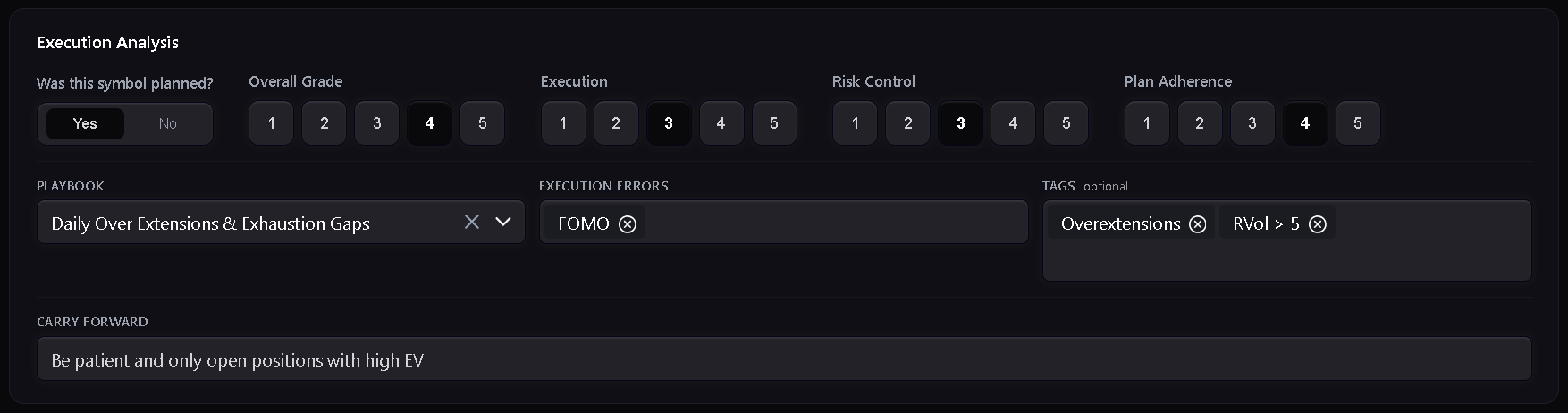
After the close, complete the post-market Quick Checks:
- Execution quality: Were entries and exits clean?
- Risk control: Did you respect planned risk?
- Plan adherence: Did trades match the plan?
Then open Symbol Reports for the symbols you traded. Review planned vs unplanned trades, setup quality, Playbook context, mistake tags, notes, and charts.
The Definition Of A Good Day
A good day is not only a green day. A good day is one where the execution matched the plan, risk was controlled, and the review tells you what to repeat.
A bad day can be green if it rewarded behavior you should not repeat.
Use Trandence to make that difference visible. The goal is to improve the process that produces your results, not to let one P&L number decide the story.
Ready to Master Your Trading Psychology?
Join Trandence and let data-driven analytics detect tilt, enforce your playbook, and grade your execution — so you can trade with discipline.
Start Your Free Trial