
Averaging Down: The Toxic Habit That Destroys Trading Accounts
There is one behavior that turns small mistakes into account-level damage: adding to a losing position because you do not want to accept the loss.
Averaging down feels logical in the moment. The average price improves, breakeven looks closer, and the trader feels like they are taking control. In fast-moving day trading, it often does the opposite. It increases exposure while the original idea is already failing.
The Psychology Behind The Trap
Averaging down usually starts with negotiation:
- “If I add here, I only need a small bounce.”
- “The move is overextended.”
- “I will get out at breakeven.”
- “It is too late to stop now.”
That is no longer a planned trade. It is a refusal to accept invalidation.
How Trandence Helps You See It
Trandence can help surface averaging-down behavior through behavioral badges, Symbol Reports, trade groups, planned risk review, and Dashboard/Calendar insights.
If a session contains repeated entries into a losing idea, review:
- Whether the trade followed a Playbook
- Whether the planned risk amount was respected
- Whether size increased for a valid reason
- Whether the trade became unplanned after the first entry
- Whether giveback or fee drag grew because of repeated entries
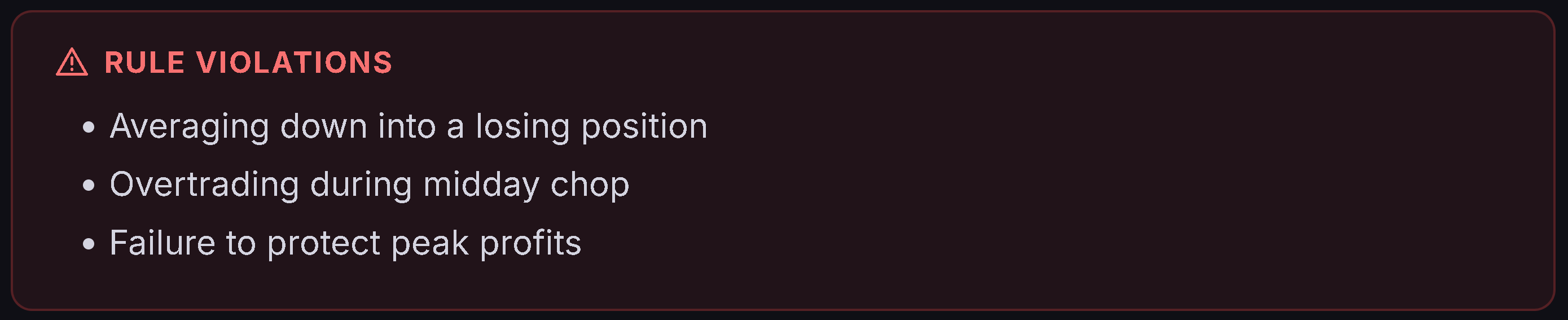
Turn The Review Into A Rule
If averaging down appears in your review, do not leave it as a vague lesson. Add a visible rule:
- No adding to a position after the planned stop is invalidated.
- Any add must be part of the original Playbook.
- If an add turns the trade unplanned, mark it honestly in the Symbol Report.
- If the behavior repeats, reduce risk until the pattern is gone.
Small losses are part of the business. Unplanned adds are optional. Use Trandence to make the difference impossible to ignore.
Ready to Master Your Trading Psychology?
Join Trandence and let data-driven analytics detect tilt, enforce your playbook, and grade your execution — so you can trade with discipline.
Start Your Free Trial