.png)
.png)
.png)

It’s 9:20. You’ve got a ticker and a setup you like, and you’re about eighty percent sure.
Here’s a question you should be able to answer before you click buy: how have you actually done on this exact combination? Not gaps in general. This ticker, this setup, you.
Almost nobody can answer it. Not because the information doesn’t exist — you recorded it — but because it’s sitting in four hundred rows you are never going to read at 9:20.
That is the gap this closes.
Asking instead of remembering
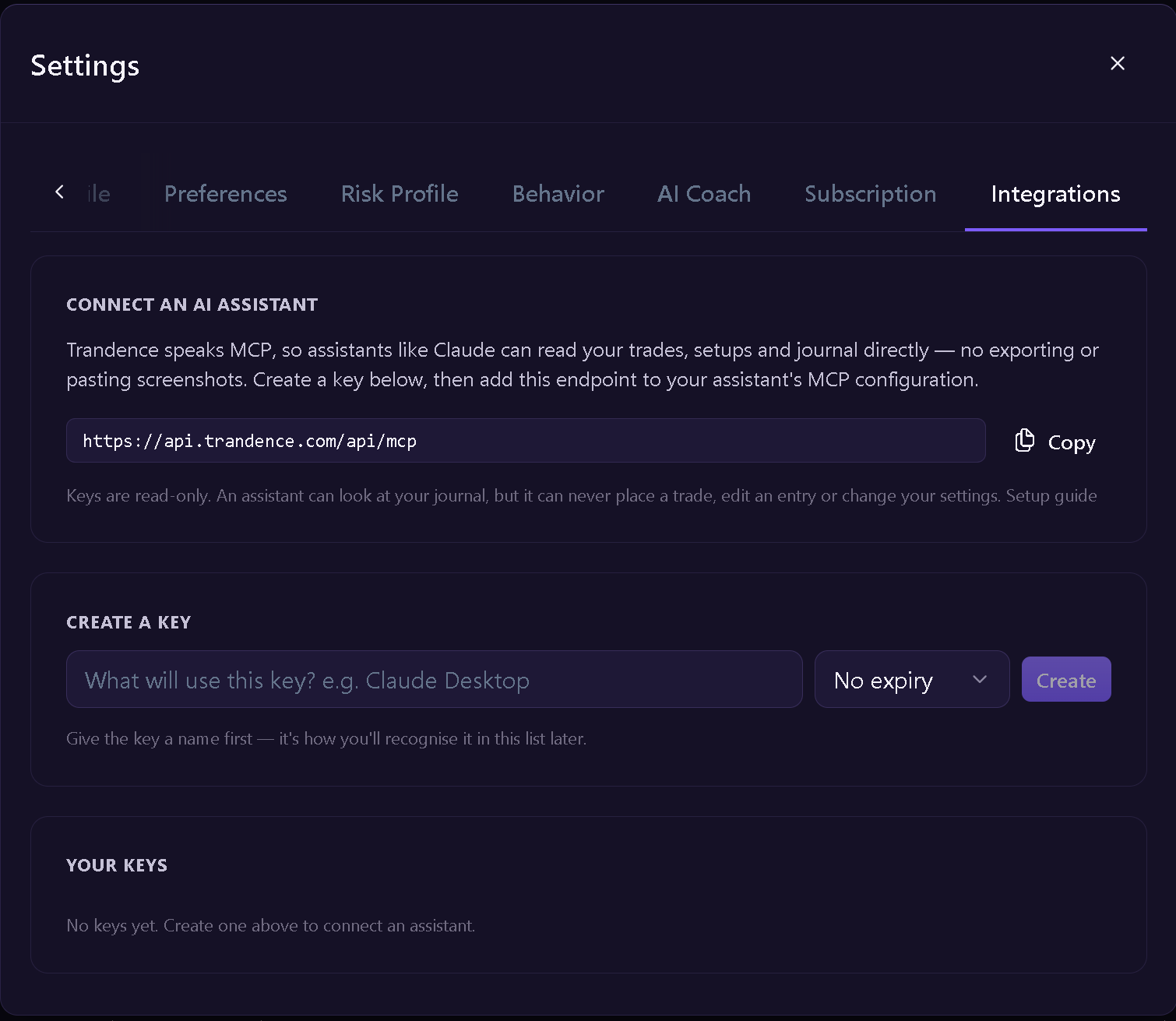
Trandence now speaks MCP — the open standard assistants use to reach outside data. Connect it once, and Claude or ChatGPT reads your trades, statistics, setups, playbooks and journal directly. No exporting CSVs, no pasting screenshots.
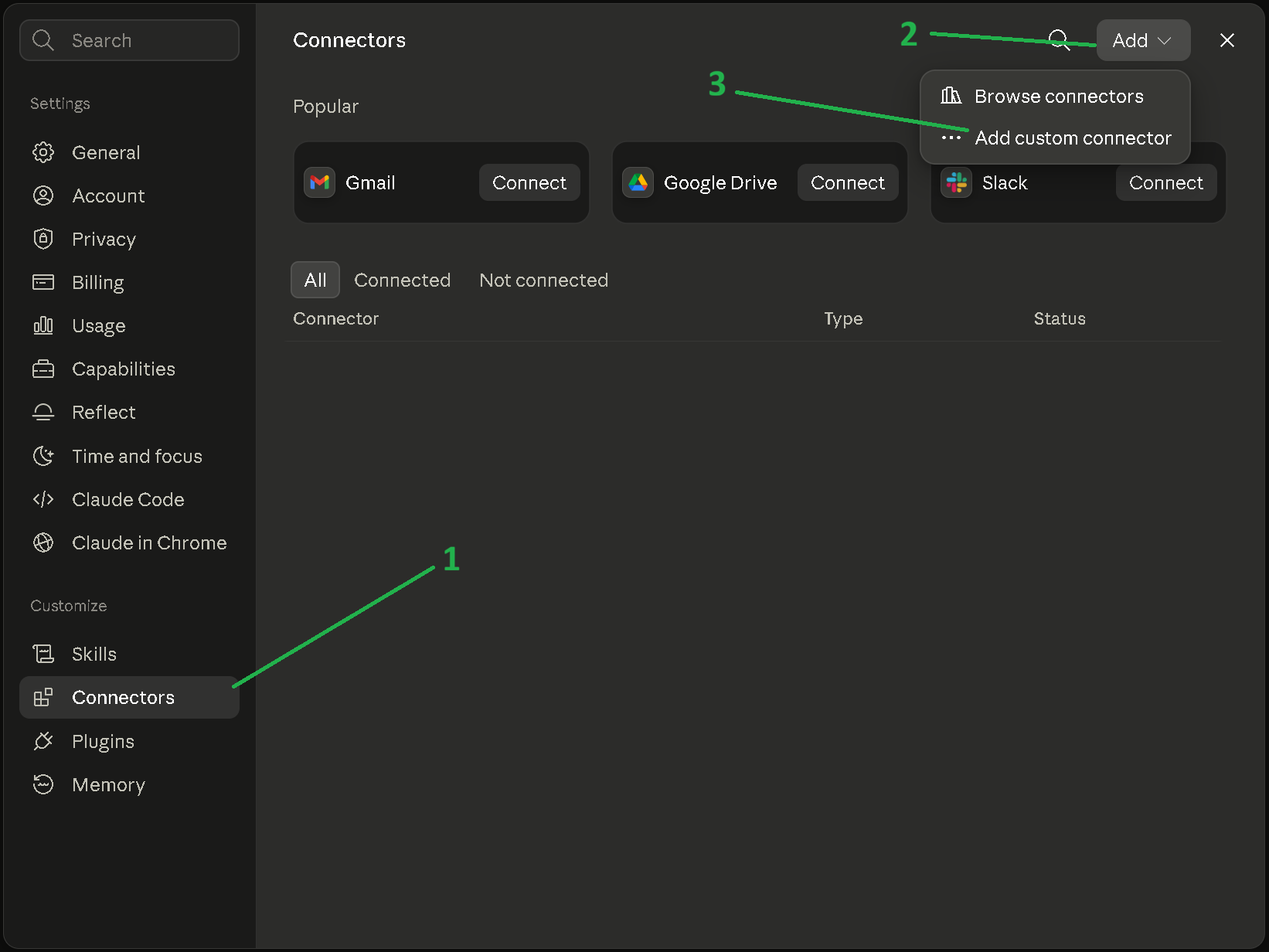
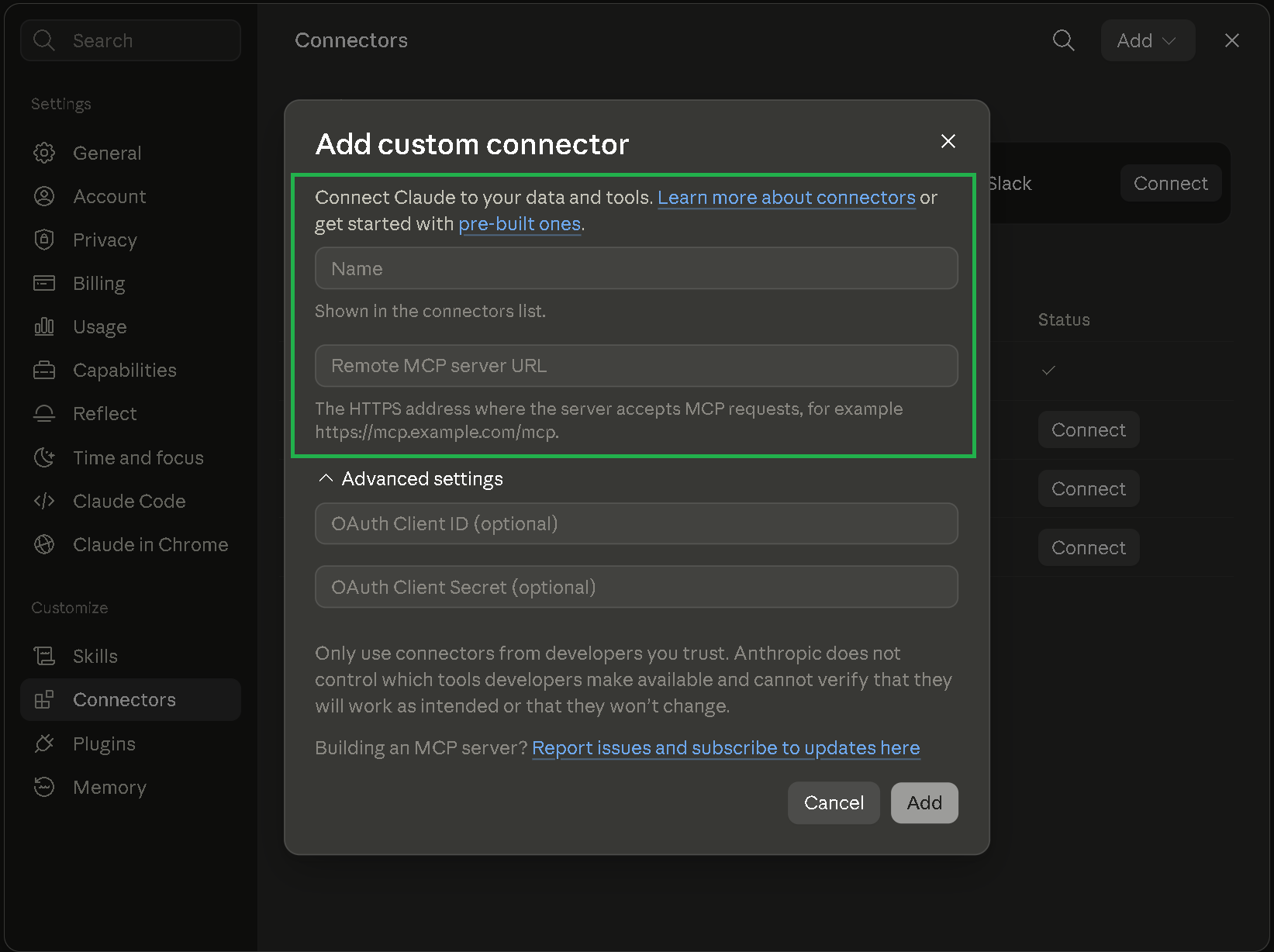
Then the question above becomes something you just type:
I’m looking at NVDA off the gap, planning to trade it on my Gap Continuation playbook. What does my own record say?
And the answer comes back from your journal, not from the internet. How many times you’ve traded that playbook and what it returns. Your history in that specific ticker. Your daily stop for today, the grade you gave the setup this morning, and what your own risk matrix says that grade is allowed to risk.
Worth being precise about who does what here: Trandence supplies the data; the assistant does the thinking. We don’t tell anyone what to trade and we have no opinion about NVDA. What changes is that the assistant reasoning about your trade is finally reasoning about your trading — not the average of everything ever written about gaps.
What it looks like on a real month
I pointed an assistant at my own February. My numbers, my account.
“Analyse my trading for February.”
218 trades. Win rate 24.77%. Net P&L -1072.79.
Then the part I hadn’t put together: gross was -418.95, and commissions were 653.84. Fees didn’t shave the month, they made the loss two and a half times bigger. I’d been describing February to myself as “a small red month.” It was a small red month plus an expensive one, and I’d been quietly counting only the first half.
“Which tickers cost me the most?”
Eleven tickers where I never had a single winning trade came to -1432 between them — more than the entire month’s loss, offset by the ones that worked. SNSE alone: six trades, no winners, -517.
Six trades. I could not have told you SNSE was in my February at all.
“Break it down by day.”
Five winning days against thirteen losing ones. And 17 February: 34 trades in a single session, my busiest day of the month, for a grand total of +85. Thirty-four decisions to earn less than one good trade.
None of that took longer than a few seconds, and none of it is a number I could have produced from memory.
Where it gets genuinely interesting
P&L by ticker is useful. Judging your process is a different level, and that’s what the playbook and setup-grade tools are for.
Tag your trades to the playbook you were running, and the question stops being “how did I do” and becomes “is this strategy working for me”. An answer takes the shape of: this playbook is your second most-traded and it holds up — but every losing trade on it last quarter was an entry before the first pullback, which is rule two on your own list.
Grade your setups, and “should I size this up” becomes answerable too. Your risk matrix already says how much of the daily stop each grade may risk. The assistant can hold that intention next to the outcome — and it is uncomfortably common to find that the grade you bet biggest on isn’t the one that actually pays, while a lower grade you size down quietly carries the account.
That’s not a report. That’s someone reading your rules back to you at the moment they matter, with the evidence attached.
Why the answers can be trusted
Every figure arrives pre-computed from the journal — the same numbers the app shows you. The assistant isn’t adding up trades in its head; it receives the totals. Ask two different ways and you get the same answer.
Where data is missing it says so, rather than filling the gap. No trades in a period returns “nothing recorded”, not a neutral-looking zero that reads like a finding. Discipline with nothing behind it comes back as no data, not as a score of nought.
One honest caveat: assistants are still weak at arithmetic they do themselves. If yours adds up a column and quotes you a total, sanity-check it — or ask for the figure directly, which comes back computed.
It looks. It touches nothing unless you let it
There is no version of this connection that places a trade, moves a price, edits what you wrote or changes a setting. It reads only your own data, you approve it on a Trandence page that names the app and shows exactly what it may do, and you disconnect it by removing the connector in your assistant’s own settings.
There is exactly one thing you can let it change, and the box stays unticked until you tick it: writing in three fields of your journal — your plan for a day, your reflection on a day, your reflection on a symbol you traded. Your trades, figures, tags, setups, playbooks and scores stay untouchable either way. Those are what the analytics are computed from, and an assistant filling them in would mean the numbers were partly measuring the assistant.
Where you have already written something it cannot quietly replace it: the write is refused, and it has to show you what is there and ask first. Everything it does write is marked in the app as its work, and the text it replaced is kept, so one click puts your own words back. Ignore the box and the connection is read-only.
Try it on a decision, not a report
Setup takes about a minute — the full guide is here, for both Claude and ChatGPT.
Then don’t ask it to summarise your month. Ask it something you’re about to act on:
- “I want to trade [ticker] on [playbook] today. What does my record say about that?”
- “Which tickers do I keep going back to and losing on?”
- “Was I disciplined last week? Be honest.”
- “Do the setups I size up on actually pay better than the ones I don’t?”
- “How much of my P&L is going to commissions?”
The last one took me four seconds and changed how I think about position sizing.
One thing to know going in: how much you get out of this is set by how much you put in. The trades import themselves; the playbook tag, the setup grade and the two lines after the close are what turn accurate numbers into a read on your process.
What has changed is the typing, not the thinking. Talk the day through after the close and let it write your reflection down for you — that is the part nobody does at 16:05, and it is why journals get abandoned. What it cannot do is have the thought for you. Nobody reconstructs what you were seeing at 9:20 from the fills, which is exactly why the assistant is told to ask rather than invent, and why anything it writes stays marked as its own until you make it yours.
You’ve been keeping the tape all along. This is just the first time anything has read the whole thing back to you.
.png)
.png)