.png)
.png)
.png)

Most pre-market routines start and end with the same question: what’s in play today. Scan the gappers, check the news, build a watchlist. What most traders skip is the question right before it — what happened the last time I traded a setup like this.
A setup you’re about to trade this morning almost never showed up for the first time this morning. If it’s a gap-and-go, chances are a similar name gapped and went (or gapped and faded) yesterday, or the day before. That trade is sitting in your journal already. The question is whether you look at it before you’re back in the same setup live, or after.
Same setup, different day, same behavior
Markets don’t reset the character of a setup every 24 hours. A stock that’s actively “in play” — heavy volume, news catalyst, everyone watching the same levels — tends to keep trading the same way session to session while that catalyst is fresh. If gap-and-go names have been running clean through the first 15 minutes and then fading hard into 10am for the last two days, that’s not a coincidence you find out about after you get run over by it a third time. It’s a pattern sitting in your last two sessions, waiting to be checked.
This is the part a lot of planning routines miss. You look forward to today’s watchlist and backward to your win rate for the month, but not backward to yesterday’s version of today’s setup. That’s the gap.
What this looks like before the bell
Say you’re building today’s plan and one of the names on your radar looks like a textbook gap-and-go — heavy premarket volume, holding above VWAP, similar profile to a few names you’ve traded before. Before you commit to trading it the same way, it’s worth pulling up your last two or three sessions and checking: did I trade this exact setup recently, and how did it actually go?
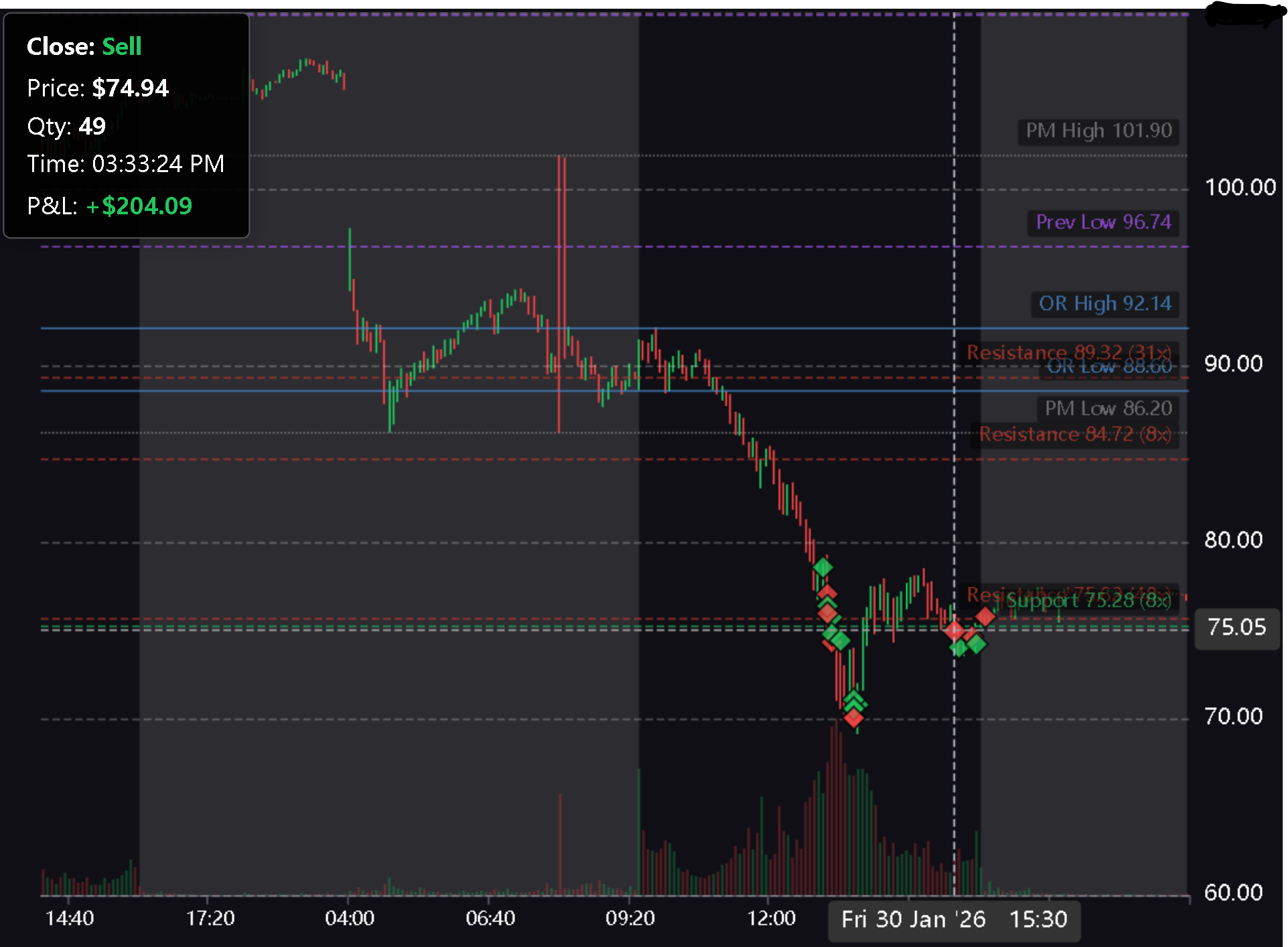
In Trandence, that’s a Symbol Report and a chart away. Pull up the intraday candlestick chart from the last time you traded a comparable gap-and-go, with your actual execution markers on it — where you entered, where you exited, plotted against the real price action instead of your memory of it. Lay in the levels that mattered: premarket high, opening range, the level price actually respected or blew through. Then ask the honest question: did that trade work because the setup was good, or did it work despite a bad entry that got bailed out by a strong tape? Did it fail because the setup broke down, or because you got in two ticks late chasing it?
That answer changes how you should trade the same setup today. A setup that failed because you chased it late is still a good setup — fix your entry. A setup that failed because the level didn’t hold at all is a warning that today’s version of it might not either.
Why this works better than memory
You can try to do this from memory, and most traders do — a rough sense that “gap-and-go’s have been choppy lately” floating in the back of your head while you plan. The problem is memory smooths things over. It remembers the outcome and forgets the details: exactly where price was relative to your levels, exactly how long the move took to develop, exactly what your execution looked like versus what the setup offered.
Reviewing the actual chart instead of the memory of the trade is also what builds real pattern recognition over time. Traders who look at the same kind of setup on a chart repeatedly — not just recall the P&L — get faster at reading it live. You start recognizing a stalling gap-and-go half a second before you’d otherwise talk yourself into chasing it, because you’ve seen that exact shape fail recently, not three months ago.
Make it part of the plan, not an afterthought
This isn’t a replacement for the deeper monthly or quarterly review that looks at your discipline and consistency over time — that view matters too, and it’s a different question answered on a different timescale. Checking your last few sessions against today’s setups is narrower and more urgent: it’s asking whether the specific thing you’re about to do this morning already showed you its hand in the last day or two.
The habit is simple to build in: when your pre-market plan flags a setup, spend two minutes checking whether you traded something similar in the last session or two, and actually look at how it went — not just whether it won or lost, but what the chart looked like while it happened. Then write down what you’d tell yourself before doing it again. That note is what makes the next identical setup, tomorrow or the day after, easier to trade well.
.png)
.png)